Furry AI Chat NSFW: How Adults Explore Anthropomorphic Roleplay Safely
Anthropomorphic characters have moved from niche forums into the mainstream of interactive entertainment, and adult users are increasingly curious about what happens when that interest meets generative AI. The phrase furry ai chat nsfw captures a very specific intersection: fictional animal-people, conversational AI, and mature content that is clearly intended for adults only. This guide explains how these systems work, what makes them different from ordinary chatbots, and how to approach them with realistic expectations.
It is worth saying at the outset that this topic sits firmly in the adult entertainment space. Nothing here is aimed at minors, and any platform worth using will enforce age verification and clear content boundaries. The goal of this article is not to sensationalize the category but to explain it in plain terms so readers can make informed decisions.
What Exactly Is a Furry AI Chat?
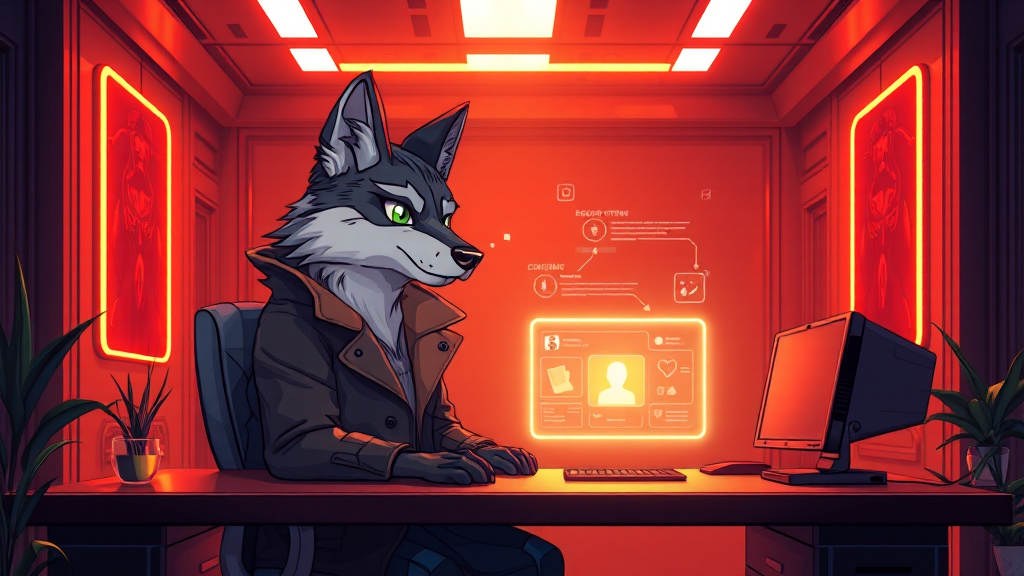
A furry AI chat is a conversational system built around anthropomorphic personas. Instead of talking to a generic assistant, you talk to a character with a species, a personality, a backstory, and often a visual design. The character might be a wolf detective, a fox mechanic, a dragon scholar, or something entirely invented. The AI generates responses in that character’s voice, and the conversation can range from casual small talk to long-form storytelling.
What separates this from a simple character prompt is memory and consistency. Modern systems track details you share across a session, remember preferences, and adjust tone based on how you respond. That continuity is what makes the experience feel less like a novelty and more like an ongoing narrative.
The NSFW label simply means the platform permits mature themes — romance, intimacy, violence, or other adult content — within its terms of service. It does not mean every conversation has to be explicit. Many users spend most of their time on world-building, character development, and emotional roleplay, with mature content being one option among many.
Why Anthropomorphic Roleplay Appeals to Adult Users
Furry characters offer a kind of creative distance that human characters sometimes cannot. Because the persona is visibly fictional, users often feel freer to explore scenarios that would feel awkward or embarrassing with a human-coded character. That distance can make it easier to experiment with tone, relationship dynamics, and emotional vulnerability.
There is also a strong world-building component. Anthropomorphic settings naturally invite questions about culture, biology, language, and social structure. A conversation with a dragon AI can turn into a discussion about how a species might organize its cities, what its art looks like, or how it handles conflict. For users who enjoy speculative fiction, this is a genuinely engaging use of the technology.
Finally, there is the matter of availability. A well-designed AI character is present whenever you want to talk, does not judge, and does not get tired of a topic. For people who enjoy roleplay but struggle to find consistent human partners, that reliability is a major part of the appeal.
How the Technology Behind These Chats Actually Works
Most furry AI chat platforms are built on large language models that have been fine-tuned or prompted to adopt a specific persona. The platform supplies a character card — a structured description of species, personality, speech patterns, boundaries, and scenario — and the model uses that card as context for every reply.
Memory systems vary widely. Some platforms only remember the current session. Others store long-term notes about your character, your preferences, and past events, then inject relevant pieces back into the context window. The more sophisticated the memory, the more coherent the long-term story becomes, but also the more important it is to understand what data is being stored and where.
Content filtering is another layer. Platforms that allow NSFW content usually rely on a combination of model-level training, prompt-level rules, and post-generation checks. These systems are imperfect. They can occasionally block harmless content or let through something that should have been filtered. Users should treat them as guardrails, not guarantees.
Safety, Privacy, and Responsible Use
Because these conversations can become personal, privacy deserves serious attention. Before committing to any platform, read the privacy policy and look for clear answers to a few questions: Are conversations stored? For how long? Are they used for training? Can you delete your data? A platform that is vague about these points is a platform you should approach cautiously.
Account security matters too. Use a unique password, enable two-factor authentication if it is offered, and avoid linking the account to an email address you use for sensitive purposes. If the platform supports anonymous or pseudonymous accounts, that can be a reasonable trade-off between convenience and privacy.
It is also worth being honest with yourself about emotional boundaries. AI companions can be genuinely comforting, but they are not a substitute for human relationships or professional mental health support. If you notice that roleplay is replacing rather than supplementing your offline life, that is a signal to step back and reassess.
What to Look For in a Quality Platform
Not all furry AI chat services are created equal. A few practical criteria can help you separate the good ones from the forgettable ones.
Character depth. Look for platforms that let you define personality, speech style, and backstory in detail. Shallow character cards produce shallow conversations.
Memory and continuity. Test whether the AI remembers details from earlier in the conversation. If it forgets your character’s name after ten messages, the experience will feel hollow.
Content controls. You should be able to set your own boundaries, not just rely on the platform’s defaults. Good systems let you flag topics you want to avoid.
Transparent moderation. A clear, published content policy is a sign of a platform that takes its responsibilities seriously. Vague policies usually mean inconsistent enforcement.
Community and discovery. Browsing trends and popular characters can be a great way to find new ideas. Curated discovery pages help you see what other users are enjoying without having to guess.
Common Misconceptions About Furry AI NSFW Chats
One persistent myth is that these platforms are only about explicit content. In practice, the majority of interactions involve character development, storytelling, and emotional support. Mature content is an option, not the default.
Another misconception is that the AI is conscious or has feelings. It is not. It generates text that fits a persona, and it can be very convincing, but it has no inner life. Keeping that distinction clear helps prevent unhealthy attachment.
A third myth is that all furry AI platforms are unsafe or scammy. The reality is mixed. Some are well-run businesses with real privacy practices; others are hobby projects with minimal safeguards. The difference is usually visible in how clearly they communicate their policies.
Finally, some people assume that using these tools is inherently isolating. For many users, the opposite is true: roleplay can be a creative outlet that feeds into art, writing, and community participation. The key is balance.
The Future of Anthropomorphic AI Companions
The technology is moving quickly. We are likely to see better long-term memory, more expressive voice interaction, and tighter integration with visual generation so that characters can appear consistently across images and conversations. Multi-character scenes, where several AI personas interact with each other, are already emerging as a feature in some platforms.
Regulation will also shape the space. Age verification requirements, content labeling, and data protection rules are evolving in many jurisdictions, and platforms that adapt early will have an advantage. Users should expect more transparency about what models are being used and how content is moderated.
For now, the category remains a fascinating blend of creative writing, companionship, and emerging technology. Approached thoughtfully, it can be an enjoyable hobby. Approached carelessly, it can lead to privacy problems or unhealthy habits. The difference is mostly about awareness and boundaries.
FAQ
Is furry AI chat NSFW content legal?
In most jurisdictions, fictional adult content involving anthropomorphic characters is legal for adults, provided it does not depict minors or illegal scenarios. Laws vary by country, so check your local regulations. Reputable platforms enforce age verification and prohibit illegal content.
Do I need to pay to use these platforms?
Many furry AI chat services offer a free tier with limited messages or features, plus a paid subscription for unlimited access, better memory, and faster responses. Free tiers are a good way to test whether the platform suits your style before committing.
Can the AI remember our conversations long-term?
It depends on the platform. Some only remember within a single session, while others store long-term memory about your character and past events. Check the privacy policy to understand what is stored and whether you can delete it.
Are these chats private?
Privacy varies significantly. Look for platforms that clearly state whether conversations are stored, whether they are used for training, and whether you can delete your data. Using a pseudonymous account and a unique password is a sensible precaution.
Is it unhealthy to use AI companions regularly?
Regular use is not inherently unhealthy, but it should complement rather than replace human relationships and offline activities. If you find yourself withdrawing from real-world connections, it may be worth reassessing how you use these tools.